Which glass for which beer? The tasting guide
Which glass for which beer? Tulip, stein, pint or teku: find the right glass for each style and the right moves to serve your beer well.
Serving a beer in "whatever glass is at hand" is like listening to music through bad speakers: the experience misses the point entirely. Every beer style has a glass that suits it, designed to reveal its aromas, hold its foam and flatter its colour. Here's how to pick the right one, no expert gear required.
Does the glass really change the taste?
Yes, and it's not folklore: the shape of the glass steers the foam, concentrates or spreads the aromas toward the nose, and influences the tasting temperature. A flared glass releases the floral notes of an IPA, a narrowed glass concentrates the aromas of a Belgian beer, and a thin glass keeps a lager fresher for longer. The vessel is part of the recipe.
- The shape guides how aromas travel to the nose, where much of perceived taste actually happens.
- The rim's width determines how well the foam holds: a wider opening captures the released CO2 better.
- The glass thickness affects how fast the beer warms up in your hand.
- The size avoids serving a strong beer in big gulps, or a light beer in frustratingly small ones.
Glasses and their beers
There is a handful of glass families worth knowing, each built for a specific beer profile. You don't need to own them all: start with one or two shapes suited to your favourite styles, then add more as you explore.
The tulip: IPAs and triples
With its rounded bowl and narrowed neck, the tulip captures the hoppy aromas of an IPA or the spiced notes of a triple, then concentrates them toward the nose with every sip. It's the go-to all-rounder for any aromatic, well-hopped beer.
The chalice: Belgian and Trappist beers
Wider and sturdier than the tulip, the chalice is built for rich Belgian beers and Trappist ales. Its generous opening lets ripe-fruit and spice notes breathe, while its solid shape supports a dense, long-lasting foam.
The stein: lagers and Oktoberfest beers
The thick-walled stein, handle or no handle, is built for conviviality and refreshing lagers. Its thick glass keeps the drink cooler for longer, which matters for a beer meant to be drunk in big gulps among friends, without chasing aromatic subtlety.
The pint glass: ales and stouts
The English pint glass, straight or slightly conical, suits ales and stouts well. Its simple shape doesn't try to concentrate aromas but offers a good grip and a generous volume, perfect for a well-rounded beer meant to be savoured slowly.
The weizen glass: wheat beers
Tall and slender, the weizen glass showcases the hazy colour and abundant foam of a wheat beer. Its height lets the foam build without overflowing, and its narrowness preserves the carbonation that carries the style's typical banana and clove notes.
The teku: serious tasting
Designed by enthusiasts for pure tasting, the teku looks like a repurposed wine glass: thin stem, tightly narrowed neck. It concentrates aromas to the maximum, making it the choice of drinkers who want to analyse a complex beer rather than drink it quickly.
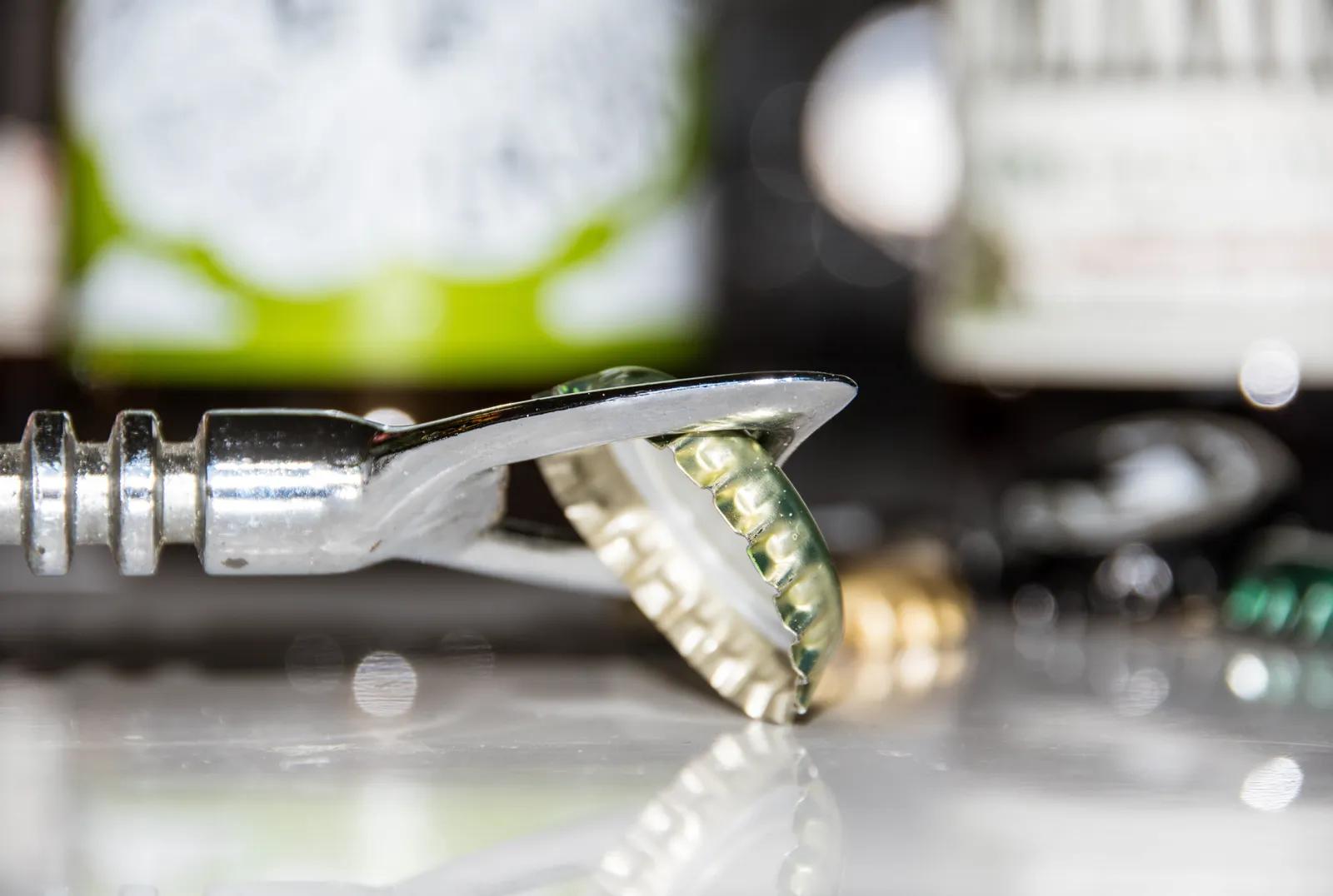
And before picking the glass, the first step of any tasting is opening the bottle with style: a good bottle opener is already part of the ritual.
Serving beer the right way
The right glass isn't enough if the pour is sloppy: temperature, pouring angle and glass cleanliness all matter just as much. These few simple habits turn a decent beer into a great one, no special gear needed.
- Rinse the glass with cold water right before serving: a dry or dusty glass kills the foam within seconds.
- Tilt the glass at 45° at the start of the pour, then straighten it gradually to build a clean head of foam.
- Respect the style's temperature: lagers are best served cold, while Belgian beers and stouts benefit from being a touch less cold to reveal their aromas.
- Avoid an ice-cold glass, which mutes the taste: a beer that's too cold reveals far fewer of its aromas.
- Serve in a clean glass, free of grease: the slightest fatty residue makes the foam collapse instantly.
Great service starts at the opening: discover the bottle opener that sets the tone before you even pour.
Discover the mortarFrequently asked questions
Which glass should I pick if I only own one?
The tulip is the most versatile choice: it suits IPAs, lighter Belgian beers and most ales. It's the best compromise for anyone who only wants to own one type of glass.
Does the glass really matter as much as the beer itself?
It doesn't replace the quality of the beer, but it strongly shapes how you perceive its aromas and foam. With the same beer, a well-suited glass reveals more nuance than a random one.
Do I need a different glass for every beer style?
No, that's not necessary. It's better to own two or three shapes covering the main families (tulip, pint, stein) than to try to collect one glass per style. Find our essentials in the shop.
How do I know if my beer glass is truly clean?
Try the bubble test: in a clean glass, bubbles rise in steady columns from the bottom. If they cling messily to the sides instead, some grease or soap residue is still there.