How to host a beer tasting at home
Picking the beers, serving order, pour sizes, glasses, tasting notes and food pairings: the guide to hosting a great beer tasting at home.
A beer tasting isn't a night where you empty the fridge. It's the opposite: small pours, well-chosen beers and people who take the time to smell before they sip. Good news: you don't need to be a beer expert to host one. Here's how to put together a beer tasting at home that makes everyone want to do it again next month.
Pick a theme (and stick to it)
A theme is what turns "let's try some beers" into a real tasting. It gives the evening a common thread, makes comparisons easier and gets the conversation going. Pick just one per night and save the others for next time.
- A tour of styles: a lager, a wheat beer, an amber, an IPA and a dark beer. Ideal for beginners (our beginner's guide to beer styles will help you choose).
- One style, several breweries: five IPAs or five stouts side by side, to learn to spot the nuances.
- A regional tour: one beer per region, ideally from small local breweries.
- Seasonal beers: ambers and farmhouse ales in autumn; Christmas beers as the holidays approach.
How many beers, and how much?
This is the most important point, and the one people most often get wrong. A tasting is done in small pours: you taste, you don't down pints. Four to six beers are plenty for an evening.
- Tasting pour: about 10 cl (3-4 oz) per person per beer. A 33 cl bottle therefore serves three people.
- Four to six beers in total: beyond that, your palate gets saturated and nobody can tell anything apart.
- Plenty of water on the table, one jug per group, and a glass of water between each beer.
- Nobody has to finish their glass: a small bucket or jug to pour away leftovers means no one feels obliged.
In what order should you serve the beers?
Serving order shapes everything. Open with a heavily roasted imperial stout and the lager that follows will taste like water. The rule: go from lightest to most intense.
- 1From lowest to highest alcohol.
- 2From least to most bitter (heavily hopped IPAs towards the end).
- 3From lightest to darkest in colour, as a general rule.
- 4Sour, smoked or very distinctive beers last: they linger on the palate for a long time.
The gear: simple but thoughtful
No need for professional equipment. What matters is being able to see, smell and taste in good conditions.
- Stemmed or tulip-shaped glasses, which concentrate the aromas. A wine glass works perfectly (more in our article on which glass for which beer).
- A tasting sheet and a pen for each person.
- Plain bread or crackers to cleanse the palate between beers.
- A white background (tablecloth or sheet of paper) to judge the colour properly.
- A bottle opener that turns every opening into a moment — more on that below.
As for temperature, take the beers out of the fridge a little before serving: a beer that's too cold hides its aromas. Lagers and wheat beers are best served cool, ambers, dark and strong beers a little less so.
How to taste: the four steps
So that everyone speaks the same language, suggest a simple four-step method. Everyone writes down their impressions before sharing them, so nobody gets swayed by the loudest person at the table.
- 1Look: colour, clarity, how the head holds.
- 2Smell: swirl the glass gently and sniff. Citrus, caramel, toasted bread, fruit, spice?
- 3Taste: a small sip held for a few seconds. Sweet, bitter, sour, round, light, fizzy?
- 4Finish: what remains after swallowing. Short or long, dry or sweet?
On the sheet, a score out of 5 and two or three words are enough. The point isn't to be "right" but to compare impressions. A very effective twist: serve the beers blind (bottles hidden in paper bags) and have people guess the style.
What to eat during a beer tasting?
Food isn't optional: it complements the beer, slows the pace and makes the evening more enjoyable. Plan simple pairings to snack on between glasses.
- Lagers and wheat beers: fresh cheeses, goat's cheese, crudités, seafood.
- Ambers: Comté, tomme, cured meats, pretzels.
- IPAs: spicy dishes, aged cheddar, spiced crisps.
- Dark beers and stouts: dark chocolate, blue cheeses, coffee desserts.
Add a bit of showmanship to each opening
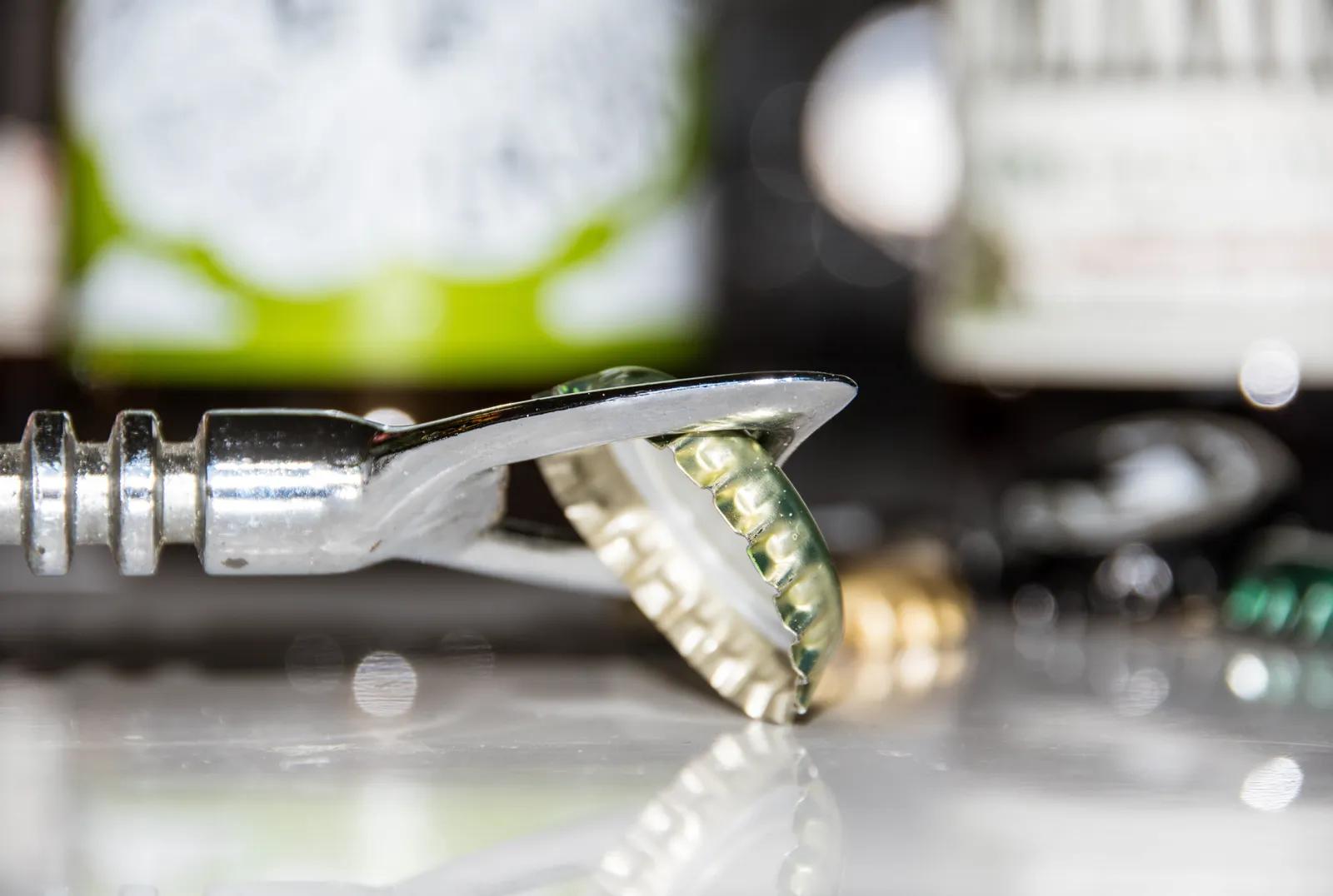
In a tasting, every new beer is a small event. Make the most of it: present the bottle, say a few words about the brewery, then open it in front of everyone. With the **Beer Mortar, the cap takes off* as the bottle opens: a guaranteed way to announce "next beer" and win back the table's attention.
Just one safety rule: always aim at a clear area, never at people or at the glasses on the table. A flying cap is still a small projectile, like a champagne cork. To understand how it works, head to how it works.
Want every beer in your tasting to start with a lift-off?
Discover the Beer MortarA great tasting is a sensible tasting
The point of a tasting is to appreciate, not to pile up. Small pours, water between each beer, something to eat, and a plan to get home: a designated driver who doesn't drink, public transport, or a sofa for those staying over. And remember to include one or two good alcohol-free beers: there are excellent ones out there today, and they fully belong in a tasting. Please drink responsibly.
Frequently asked questions
How many beers should I plan for a tasting at home?
Four to six different beers are enough, served in pours of about 10 cl per person. A 33 cl bottle therefore serves three tasters. Beyond six beers, the palate gets saturated and the tasting loses its point.
In what order should beers be served at a tasting?
From lightest to most intense: start with the least alcoholic and least bitter beers, and finish with the strongest, hoppiest or most distinctive ones (smoked, sour, imperial stouts).
What glasses should I use for a beer tasting?
A tulip-shaped glass or a wine glass is ideal: it concentrates the aromas and lets you swirl the beer. The key is to use the same type of glass for every beer, so you compare on equal terms.
How do I liven up a beer tasting with friends?
Set a theme, hand out tasting sheets and add a blind round where everyone guesses the style. To mark each new beer, an original opener like the Beer Mortar turns the opening into a little show — always aimed at a clear area.