Beer and chocolate pairing: the styles that match best
Beer and chocolate pairing: stout and porter with dark, brown ale and dubbel with milk, witbier or kriek with white chocolate, plus an alcohol-free option.
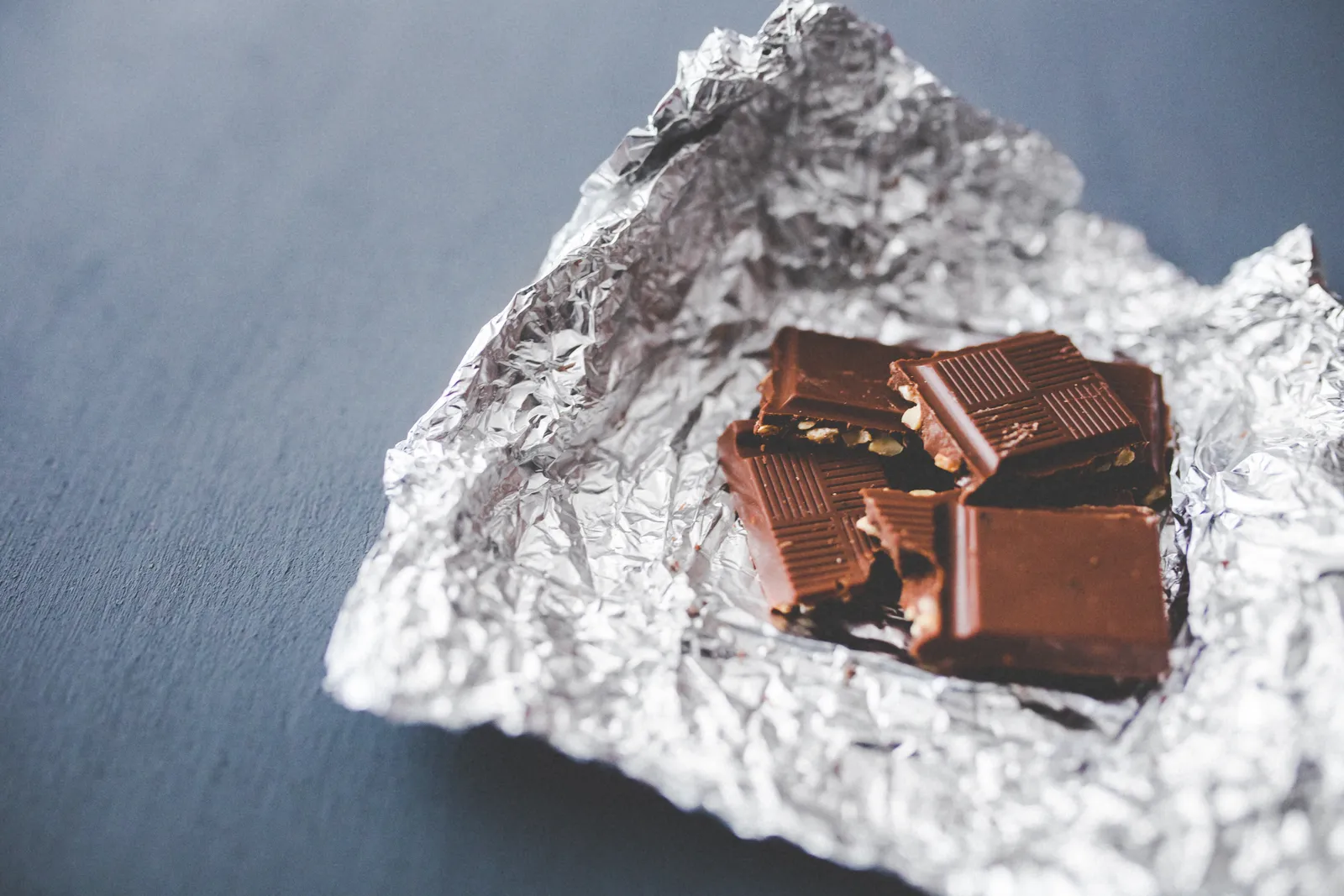
The bar of chocolate is open on the coffee table, and someone wonders which bottle to open with it. Beer and chocolate pairing works very well, as long as you match the right style to the right chocolate: dark, milk, white and praline chocolate do not call for the same beer. This guide gives you the principle behind the pairing, the styles that suit each chocolate, the ones to handle with care, how to set up a small tasting and an alcohol-free option.
In short: with dark chocolate, look for the echo of a stout or a porter, whose roasted malts already carry cocoa notes. With milk chocolate or praline, a brown ale or a dubbel brings caramel, hazelnut and dried fruit. White chocolate, which is very sweet, comes alive with a witbier or a kriek. To open the bottle, the Mortier à Bière sends the cap flying.
The principle of beer and chocolate pairing: echo or contrast
A pairing rests on two approaches. Echo brings similar flavours together: the roasted malts of a stout recall the cocoa in dark chocolate. Contrast sets opposing flavours against each other so they balance out: the fruity sourness of a kriek lightens the sweetness of white chocolate.
With chocolate, echo is the easiest way to start. Try contrast next, tasting side by side.
If beer families still feel fuzzy, our beginner's guide to beer styles sorts them out.
Dark chocolate: stouts and porters
Dark chocolate is the natural partner of dark beers. Several styles already mention cocoa in their official description:
- Sweet stout (or milk stout): very dark, full and sweet, with dominant coffee or chocolate flavours and a sweetness that answers the roasted bitterness (BJCP, Sweet Stout). An easy match for a dark chocolate that is not too bitter.
- Oatmeal stout: a stout brewed with oats, with a silky, creamy body and mild flavours of roasted coffee or milk chocolate (BJCP, Oatmeal Stout). Its silky body goes well with a ganache.
- English porter: a brown ale with restrained roastiness, often marked by chocolate and caramel, without burnt flavours (BJCP, English Porter). It has the lightest body of the four, so serve it first.
- Imperial stout: very dark and very strong, with roasted malt, dried fruit notes and a bittersweet finish (BJCP, Imperial Stout). It stands up to the most intense chocolates; its strength calls for a very small glass.
The richer the chocolate is in cocoa, the more roasted the beer can be. A mild dark chocolate goes with a sweet stout or a porter; a very intense chocolate calls for an imperial stout.
Milk chocolate and praline: brown ale and dubbel
Milk chocolate is sweeter and creamier than dark. A heavily roasted stout risks overpowering it. Malty beers with caramel notes work better:
- British brown ale: malty and caramelly, with possible notes of hazelnut, toffee, biscuit or light chocolate, without the roastiness of a porter (BJCP, British Brown Ale). Its nutty notes make it the obvious beer for praline.
- Belgian dubbel: a copper-coloured, malty ale with possible hints of chocolate, caramelised sugar and dried fruit such as raisins and plums, and a fairly dry finish (BJCP, Belgian Dubbel). It goes with filled chocolates and chocolates with dried fruit.
Praline, made with nuts, and gianduja, a paste of chocolate and finely ground hazelnuts (Wikipedia (French), Gianduja), follow the same logic: the hazelnut in the brown ale echoes the one in the chocolate.
White chocolate: witbier and kriek
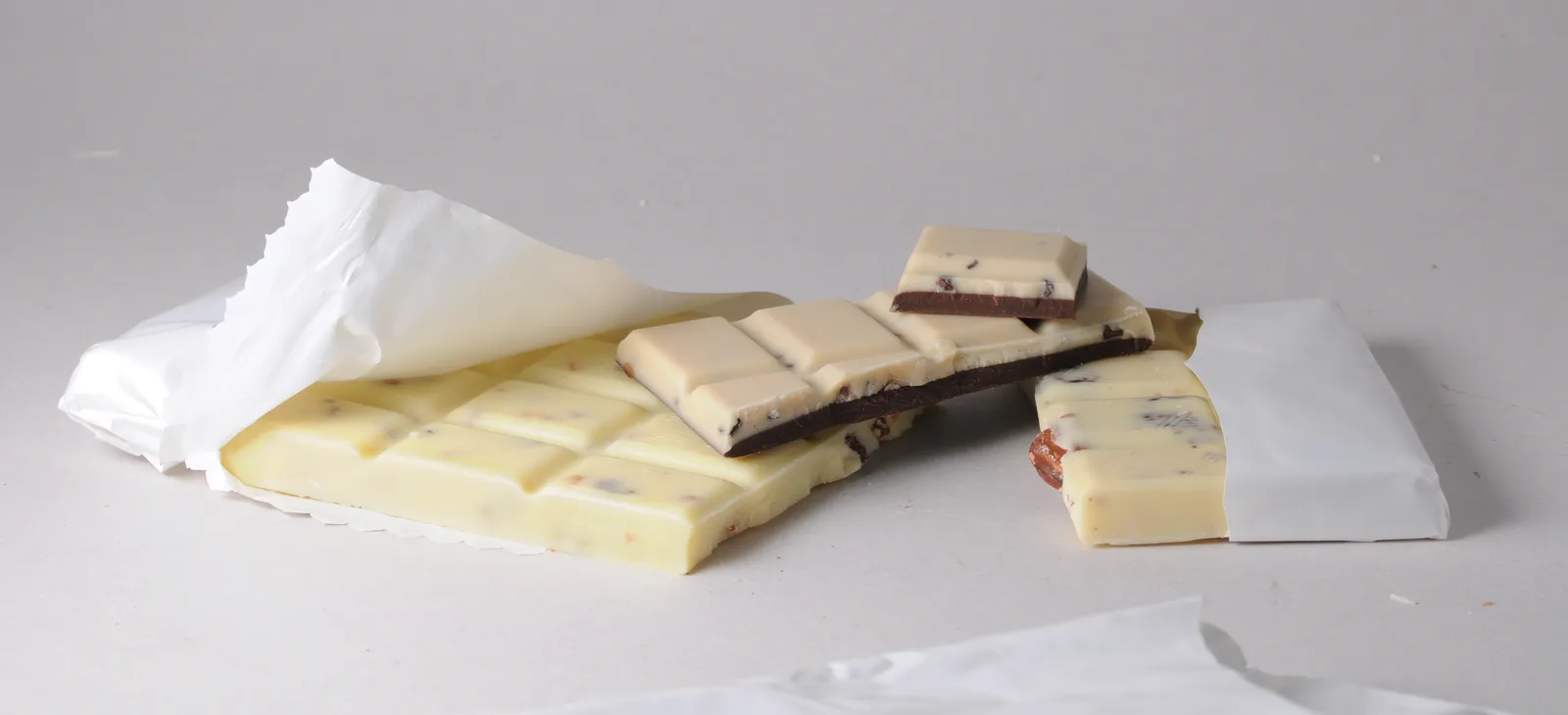
White chocolate is a special case. It is made from cocoa butter, dairy products and sugar, but contains no cocoa powder (Wikipedia (French), Chocolat blanc). There is no roastiness to echo, so here contrast works better than echo.
- Belgian witbier: light, highly carbonated, with a dry finish and notes of citrus, coriander and sometimes honey or vanilla (BJCP, Witbier). Its bubbles lighten the richness of the cocoa butter; its vanilla notes echo the white chocolate.
- Kriek: a Belgian beer flavoured with sour cherries, traditionally based on lambic (Wikipedia (French), Kriek). Traditional versions are dry and tart (BJCP, Fruit Lambic): their sourness answers the sweetness of white chocolate.
Kriek also works with dark chocolate: there, the chocolate-and-cherry duo plays on contrast.
Pairings to handle with care
Some beers clash with chocolate more than they match it:
- Very bitter beers, such as American IPA, with medium-high to very high bitterness (BJCP, American IPA): with a dark chocolate that is already bitter, the bitterness adds up.
- Light lagers: next to an intense dark chocolate, they risk going unnoticed.
- A heavily roasted stout with milk chocolate: the roastiness of the beer takes over.
These are tendencies, not rules. Tastes vary, and the best test is still tasting side by side.
Hosting a beer and chocolate tasting at home
A beer and chocolate tasting takes a few minutes to prepare. A few pointers:
- Small pieces of each chocolate and small tasting glasses, so you can try the pairing without topping up. Our guide to which glass for which beer helps you choose.
- From mildest to most intense: white chocolate and witbier first, then milk chocolate and brown ale, and finally dark chocolate and stout. It is the same logic as for a beer tasting at home.
- The method: taste the beer on its own, then the chocolate on its own, let it melt in your mouth, then take another sip. Note what changes.
- A jug of water on the table, to rinse your palate between pairings.
For the festive season, the pairing also has its place at dessert: our article on beer and foie gras suggests a festive menu in beer all the way to the chocolate. And if you would rather cook, chocolate stout cake features in our recipes for cooking with beer.
The alcohol-free option
The driver, the mum-to-be or the guest who does not drink alcohol deserve their pairing too. Alcohol-free beers follow the same logic: choose a dark or amber one for dark chocolate, a wheat beer for white chocolate. Other options:
- a coffee or an espresso, for the roasted echo with dark chocolate;
- cherry or morello cherry juice, to recreate the contrast of a kriek;
- an herbal tea or a tea, more neutral.
Our guide to alcohol-free alternatives for the festive season has more drink ideas.
Either way, drink responsibly and at your own pace. The official French drinking guidelines are set out by Alcool Info Service.
Opening the bottles for the tasting
A beer and chocolate tasting means several bottles to open. The Mortier à Bière sits on the cap; one sharp push on the plunger and the cap takes off, up to around 3 metres, with a "PCHHHIT". It is purely mechanical, with an internal spring: no battery, no app, whether the bottle contains alcohol or not.
For a more discreet move at the table, the Capblast sits on the bottle neck: press the lever down sharply and the cap pops off. Compact and light, it slips into a pocket.
Safety: a launched cap can injure at close range. Open bottles away from the table and the plates, and aim at a clear area: never at a person, an animal, a face or a screen. These bottle openers are for adults only and should be stored out of children's reach.
The rocket bottle opener: place it on the cap, one push on the plunger, and off it goes. Free shipping in mainland France, ships within 48 hours.
Discover the Mortier à BièreAll our bottle openers are in the shop. Alcohol abuse is dangerous for your health; please drink responsibly.
Frequently asked questions
Which beer goes with dark chocolate?
A stout or a porter, whose roasted malts carry cocoa notes: a sweet stout or a porter with a mild dark chocolate, an imperial stout, served in a very small glass, with a very intense chocolate.
Which beer goes with milk chocolate?
A malty beer with caramel notes, such as a British brown ale or a Belgian dubbel. Avoid heavily roasted stouts, which overpower the sweetness of milk chocolate.
Which beer goes with white chocolate?
White chocolate contains no cocoa powder, so go for contrast with a light, sparkling Belgian witbier or a kriek, whose sourness answers its sweetness.
In what order should I taste beers and chocolates?
From mildest to most intense: white chocolate and witbier, then milk chocolate and brown ale, then dark chocolate and stout. Small pieces, small glasses and a jug of water on the table.
What alcohol-free drinks go with chocolate?
A dark or amber alcohol-free beer with dark chocolate, an alcohol-free wheat beer with white chocolate, a coffee or an espresso, cherry or morello cherry juice, or an herbal tea.