How to store beer: light, heat, position and the right temperature
Upright or on its side, fridge or cellar, past its date, already opened: how to store your beers properly and what temperature to serve them at.
You brought back a case of beer from a weekend in Belgium, or a friend gave you a selection from craft breweries. Good news. Bad news: if they spend the summer on the kitchen windowsill, they may end up in your glass tasting of wet cardboard. Beer is a living, rather fragile product. Here's how to store beer properly, and what temperature to serve it at so it shows its best side.
Beer's three enemies
A beer that ages badly has almost always met one of these three opponents, sometimes all three at once.
Light
This is the sneakiest enemy. Ultraviolet light breaks down certain hop-derived compounds and gives beer a flaw brewers know well, called lightstruck or "skunky" beer: a sulphurous smell that lives up to its nickname. A few hours in the sun is enough. Brown glass protects far better than green or clear glass, and cans protect completely. Bottom line: keep your beers away from light, especially those in clear bottles.
Heat
Heat speeds up ageing: aromas fade, oxidation sets in, and fresh hop notes disappear faster. Big temperature swings don't help either. So avoid the car boot in August, the cupboard above the oven and the uninsulated garage.
Oxygen
Once beer is packaged, oxygen is unwelcome. Over time, it brings those well-known notes of cardboard, paper or stale honey. There's not much you can do about it with a sealed bottle, other than keeping it cool and not holding on to it for years unless it's a beer made for ageing.
Where and how to store your beers
- A dark, cool and stable spot: a cellar, a pantry, the bottom of a cupboard away from heat sources. The fridge works very well too, especially for hoppy beers.
- Upright rather than on their side: yeast and sediment settle at the bottom instead of sticking to the side, and the surface of beer in contact with air stays minimal. It's the opposite of wine, and it's the rule for the vast majority of capped beers.
- In their box: a simple, effective shield against light.
- Away from strong smells if you keep them in the fridge for a long time next to the Maroilles. A cap is airtight, but why tempt fate.
Drink it fresh or let it age?
Not all beers age the same way. Some should be drunk as soon as possible, others gain complexity over time. If you're not familiar with the styles, our beginner's guide to beer styles will help you find your way.
- Drink fresh: IPAs and very hoppy beers, wheat beers, pilsners and most light blondes. Their fresh aromas are their whole point, and they're the first to go.
- Can be aged: strong, malty beers such as quadrupels, imperial stouts and barley wines, as well as some traditional sour beers like gueuze. They can round out and develop notes of dried fruit, port or leather.
For a beer you want to age, the rules above apply even more strictly: darkness, coolness and a stable temperature. And if you have several bottles of the same beer, open one now and then to follow how it evolves. It's a great excuse for a beer tasting at home.
The date on the label: should you worry?
On beer, the label usually says "best before": it's a minimum durability date, not a "use by" date like on a yogurt. Once that date has passed, the beer is generally not unsafe, but the brewer no longer guarantees its quality: it may have lost its aromas, its fizz or its freshness. An IPA six months past its date will probably be dull, while a well-stored imperial stout may do just fine.
The right reflex: look, smell, taste. If the beer smells of cardboard, vinegar or anything odd, don't force yourself. If it's just a little flat, it can still be used in the kitchen, for example in one of our beer recipes.
What temperature should beer be served at?
The common reflex is "ice-cold" beer. That works for a pilsner during a heatwave, but intense cold numbs your taste buds and hides the aromas. Here are some widely accepted guidelines:
- Pilsners, light lagers, wheat beers: well chilled, around 4 to 7 °C (39 to 45 °F).
- IPAs, pale ales, blondes: cool but not icy, around 7 to 10 °C (45 to 50 °F).
- Ambers, tripels, Belgian ales: a bit less cold, around 8 to 12 °C (46 to 54 °F).
- Imperial stouts, barley wines, quadrupels: barely chilled, around 10 to 14 °C (50 to 57 °F), like a light red wine.
No thermometer? Just remember: the stronger and darker a beer, the less cold it should be. Take beers meant for ageing out of the fridge a while before serving, and let them warm up in the glass: they'll open up sip after sip. The glass matters too, which we cover in detail in which glass for which beer.
Chilling a beer in a hurry
The doorbell rings and the beers are warm. Rather than the freezer, go for a bucket filled with water and ice, plus a good handful of salt: ice water chills much faster than ice alone, because it touches the whole surface of the bottle. Turn the bottle now and then. If you do use the freezer, set a timer: a forgotten bottle can freeze or even burst, and you'll be the one cleaning up.
What about an opened beer?
An opened beer loses its fizz and oxidises quickly: drink it there and then. If you really must keep what's left, a reusable airtight stopper and the fridge will limit the damage until the next day, not much longer. Otherwise, off to the kitchen: a flat beer works perfectly well in a sauce or a batter.
The moment of opening
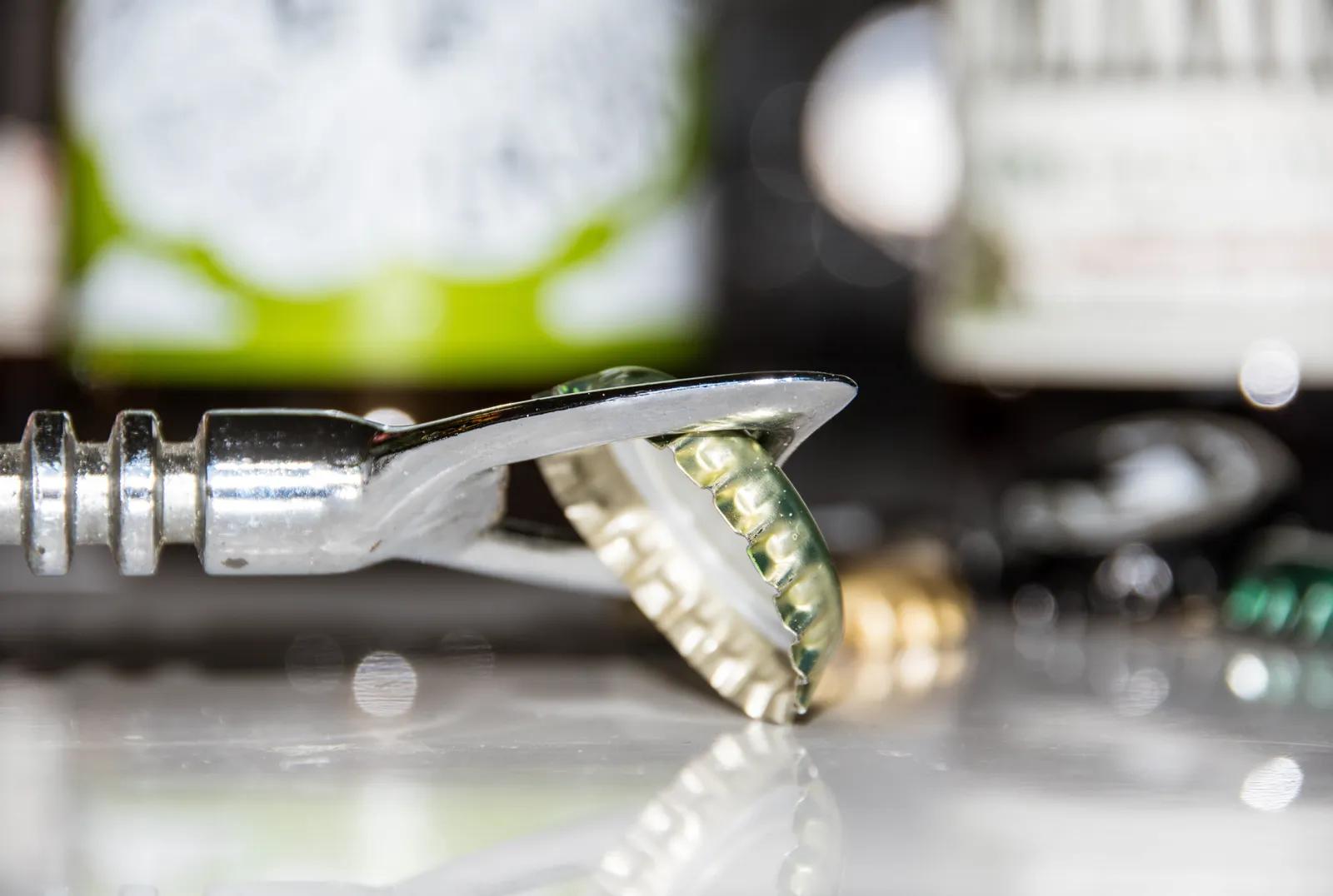
You've done everything right: bottle stored upright, cool, away from light, served at the right temperature. It would be a shame to fumble the last step. With the **Beer Mortar, the cap takes off* as the bottle opens. A fine salute to a beer that has waited patiently for months in the cellar.
Just one rule: aim at a clear area, never at people, and certainly not at your beer cellar. A flying cap is still a small projectile, a bit like a champagne cork. The principle is explained on the how it works page.
A well-kept beer deserves an opening to match.
Discover the Beer MortarStore it long, drink it wisely
A well-stored beer is best enjoyed slowly, and an aged beer is meant to be shared rather than finished alone. Keep water within reach, plan a way home for anyone who's been drinking, and remember alcohol-free beers, which follow the same storage rules. Please drink responsibly.
Frequently asked questions
Should beer be stored upright or on its side?
Upright. Yeast and sediment collect at the bottom of the bottle, and the surface of beer in contact with air stays minimal. Unlike wine, most capped beers have no reason to be laid down.
Can you drink beer after the date on the label?
Generally, yes. On beer, the date is a minimum durability date ("best before"), not a "use by" date. The beer may have lost its aromas or fizz, but it's generally not unsafe. Trust your nose and taste buds: if something seems off, don't drink it.
Can beer go from the fridge back to room temperature?
Yes, a beer that was chilled and then returned to room temperature isn't ruined. It's mainly prolonged heat and repeated big swings that speed up ageing. Ideally, keep it cool and stable.
What temperature should beer be served at?
It depends on the style: around 4 to 7 °C (39 to 45 °F) for a pilsner or wheat beer, 7 to 10 °C (45 to 50 °F) for an IPA, 8 to 12 °C (46 to 54 °F) for an amber or Belgian ale, and 10 to 14 °C (50 to 57 °F) for an imperial stout or barley wine. The stronger and darker the beer, the less cold it should be.
How long does an opened beer keep?
Not long: it loses its fizz and oxidises. With an airtight stopper in the fridge, it'll last until the next day. Beyond that, it's mostly good for cooking.